

Interrupted Matches

In football betting, interrupted match rules establish whether bets are settled or voided. This is based on how much of the match was played and whether it resumes within a set timeframe. These rules apply to matches that start as scheduled but are interrupted mid-game due to unforeseen circumstances. The concept of interrupted matches excludes those games that never begin or are completed in full after the interruption.
An interrupted match affects key betting markets like Match Result, Over/Under Goals, First Goalscorer, and Both Teams to Score (BTTS). For example, a bet on First Goalscorer is usually settled if a goal has been scored before the match is suspended, while a Match Result bet is voided unless the full match is resumed and completed within 24, 48, or 72 hours, depending on the bookmaker.
Rules for interrupted matches are particularly important in live football events where technical failures, dangerous weather, or crowd-related incidents force officials to stop the game before full time. For instance, a Correct Score bet is voided when a match ends prematurely at 1–0 in the 58th minute and never resumes, even though some markets like Half-Time Result had already been settled before suspension.
Bookmakers use rules for interrupted matches to maintain consistency across various markets, ensuring that all outcomes are handled fairly based on the situation at the time play is stopped. These rules support market stability during live betting and avoid confusion by clarifying which bets are valid and which are voided depending on how the match concludes.
Before placing a bet, always check for time-related policies set by your sportsbook. Some bookmakers void bets after 24 hours, while others allow up to 48 or 72 hours for the match to resume. It’s essential to understand your bookmaker’s rules to know what happens to your stake when a match is suspended.
Rules for interrupted matches ensure that all bets are settled fairly and consistently, helping bettors make informed decisions while avoiding confusion when original stakes are returned due to an incomplete fixture.
What Does an Interrupted Match Mean in Sports Betting?
A match is considered interrupted in sports betting when the match starts as scheduled but stops before full time. Match interruptions occur due to events such as extreme weather, crowd incidents, power failure, or medical emergencies. In these cases, the match is suspended after kick-off, and bets are either settled or voided depending on how much of the match has been played and whether it resumes within the timeframe set by the bookmaker, usually 24, 48, or 72 hours.
In standard betting rules, it’s usually stated that when the match does not resume within the window, all bets are declared void and the original stake is returned.
Why Do Bookmakers Have Rules for Interrupted Matches?
The three main reasons why bookmakers have rules for interrupted matches are fair settlement of active bets, minimising disruption during live betting, and clear expectations for timing and resolution. These rules ensure that ongoing markets are handled consistently when a match stops after kick-off, helping both bookmakers and bettors navigate incomplete fixtures with transparency and structure.
More details on the 3 top reasons why bookmakers enforce rules for interrupted matches are explained below.
- Fair settlement of active bets. When a match is suspended mid-game, some betting markets already have confirmed outcomes while others remain unresolved. Rules for interrupted matches ensure that settled outcomes like First Goalscorer are honoured, while incomplete ones like Match Result are voided unless the match resumes. This distinction helps bettors receive fair payouts without rewarding incomplete results.
- Minimising disruption during live betting. Interruptions during live matches distort odds, delay cash-out options, and impact suspended markets. Bookmakers use structured rules to manage these disruptions, keeping the betting environment stable and avoiding confusion during rapidly changing situations.
- Clear expectations for timing and resolution. By setting timeframes for when an interrupted match must resume (such as 24, 48, or 72 hours), bookmakers establish clear boundaries that help both operators and bettors understand how long a result remains valid. These guidelines reduce disputes and ensure transparency in the resolution of affected bets.
What Are the Main Reasons a Football Match Might Be Interrupted?
The three main reasons football matches are occasionally interrupted are dangerous weather conditions, crowd-related incidents, and technical failures within the stadium. These situations make it unsafe or impossible for play to continue, requiring referees or event officials to suspend the match, either temporarily or for the rest of the day.
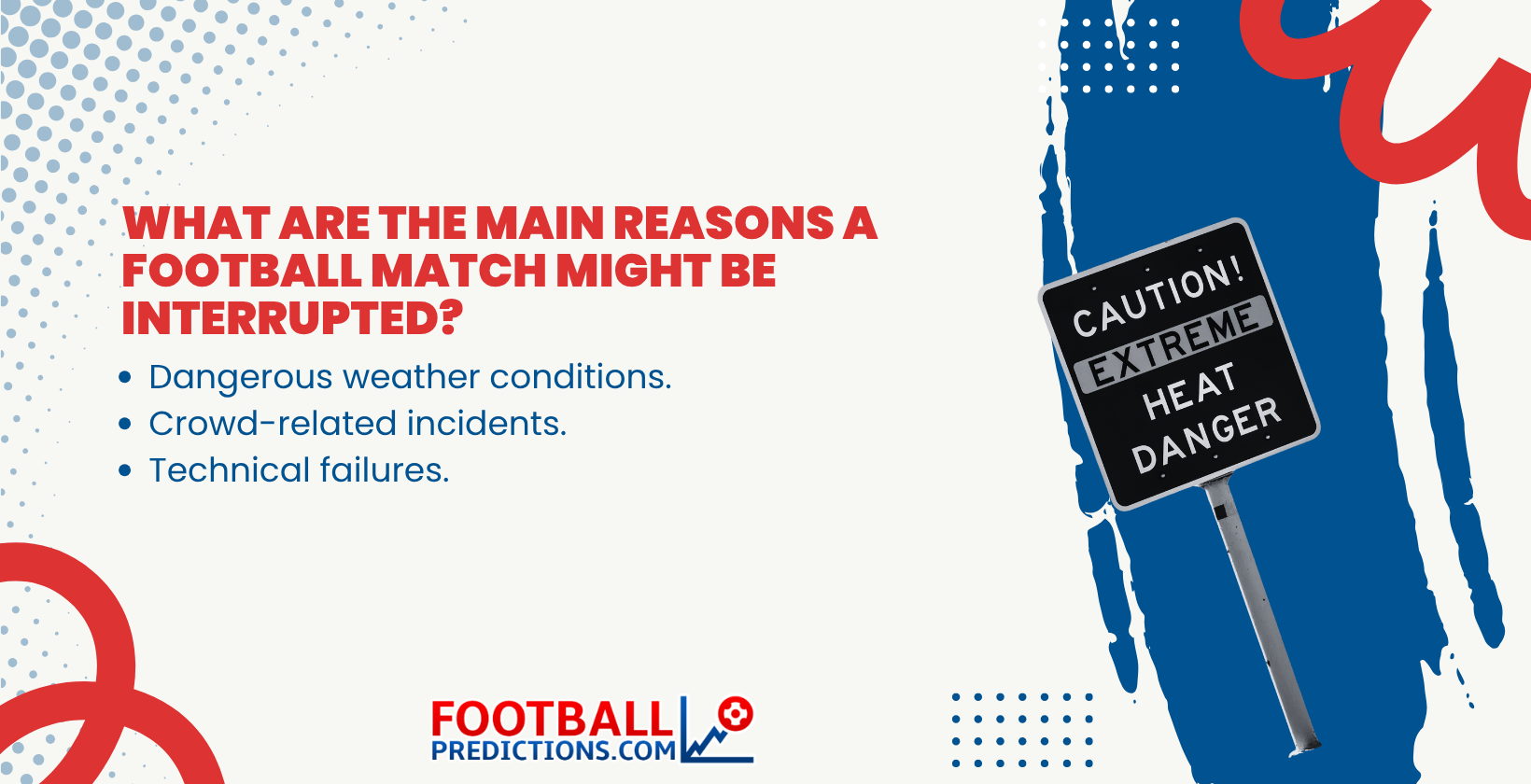
More details on the 3 main reasons football matches are interrupted are provided below.
- Dangerous weather conditions. Heavy rain, lightning, strong winds, or waterlogged pitches often force officials to interrupt a match. When weather creates unsafe conditions for players or prevents the match from continuing normally, suspension becomes necessary until conditions improve or the match is rescheduled.
- Crowd-related incidents. Pitch invasions, flares, fights in the stands, or threats to player safety often lead to match interruptions. Referees and stadium officials suspend matches to restore order and ensure the safety of players, staff, and spectators before deciding whether play will resume.
- Technical failures. Power cuts, broken floodlights, or issues with VAR and communication systems are examples of technical problems that interrupt play. Technical failures disrupt the normal conduct of the match and often require match suspension until the problem is resolved or a new date is set.
What Does an Interrupted Match Mean for an Accumulator Bet?
When one leg of an accumulator is affected by a match interruption, the selection linked to the interrupted match is usually voided, and the accumulator continues with the remaining valid legs. The potential return is recalculated based on the adjusted number of active selections. For example, in a five-leg accumulator, the bet linked to the interrupted match is removed, and the accumulator is treated as a four-leg bet. In cases where multiple legs are interrupted and all are voided, the entire accumulator is voided and the original stake is returned to the bettor.
For example, a £15 bet on a Correct Score market is voided when a match is abandoned in the 58th minute with the score at 1–0 and no continuation takes place. Markets already decided before the interruption, such as First Goalscorer or Half-Time Result, are usually settled based on the result at the time of suspension. In interrupted matches, each bookmaker sets its own interruption policy, so checking how specific markets are handled before placing a bet remains essential.
How Are Key Betting Markets Affected by Interrupted Matches?
Many football betting markets are affected by the interruption of matches, with outcomes depending on whether the match resumes and concludes within the bookmaker’s timeframe. The four main markets influenced by this rule are Match Result, Over/Under Goals, First Goalscorer, and Both Teams to Score. Bets on these markets are either settled or voided based on how much of the match has been played and whether a result had already been determined at the time of interruption.
More information on the 4 top markets affected by the interruption of matches follows below.
- Match Result. Match Result is the most common football betting market, requiring bettors to predict which team wins or if the match ends in a draw. Match Result bets are voided when a match is interrupted before the final whistle and does not resume within the bookmaker’s allowed timeframe, typically 24, 48, or 72 hours. The match must reach full time for these bets to be settled.
- Over/Under Goals. Over/Under Goals markets involve predicting whether the total number of goals in a match will finish over or under a specific line set by the bookmaker. Over/Under Goals bets are voided unless the total goal line has already been crossed at the time of interruption. For example, a bet on Over 2.5 Goals is settled when the score is 2–1 before suspension, while a 1–1 score leaves the market unresolved.
- First Goalscorer. First Goalscorer bets involve selecting the player who scores the first goal of the match. These bets are usually settled when a goal has already been scored before the match is interrupted. In cases where no goal has been scored and the match does not resume, the bet is declared void.
- Both Teams to Score. Both Teams to Score (BTTS) markets require both teams to score at least one goal during the match for the bet to win. The outcome of the match is settled when both sides have scored before the interruption. In cases where only one team has scored or the match is goalless when suspended and not resumed, the BTTS bet is voided.
What Is the Difference Between Interrupted Matches and Postponed Matches?
The main difference between interrupted matches and postponed matches lies in whether the match has started. A postponed match never begins at all (often due to weather, health issues, or security concerns before kick-off), while an interrupted match starts as scheduled but is suspended during play and left unfinished.
A second difference between interrupted and postponed matches is how bets are treated. Since postponed matches involve no in-play action, all markets remain unresolved. No goals are scored, no events occur, and every bet is voided unless the postponed match is played in full within the bookmaker’s allowed timeframe. In contrast, interrupted matches often have active outcomes at the time of suspension, as some bets are settled if the event they refer to has already occurred. For example, a First Goalscorer bet is settled once the first goal is scored, even if the match is later abandoned. In the case of Match Result or Total Goals bets, which depend on the full 90 minutes being completed, settlement depends on how much of the match was played and whether the bookmaker considers the market valid under the circumstances.